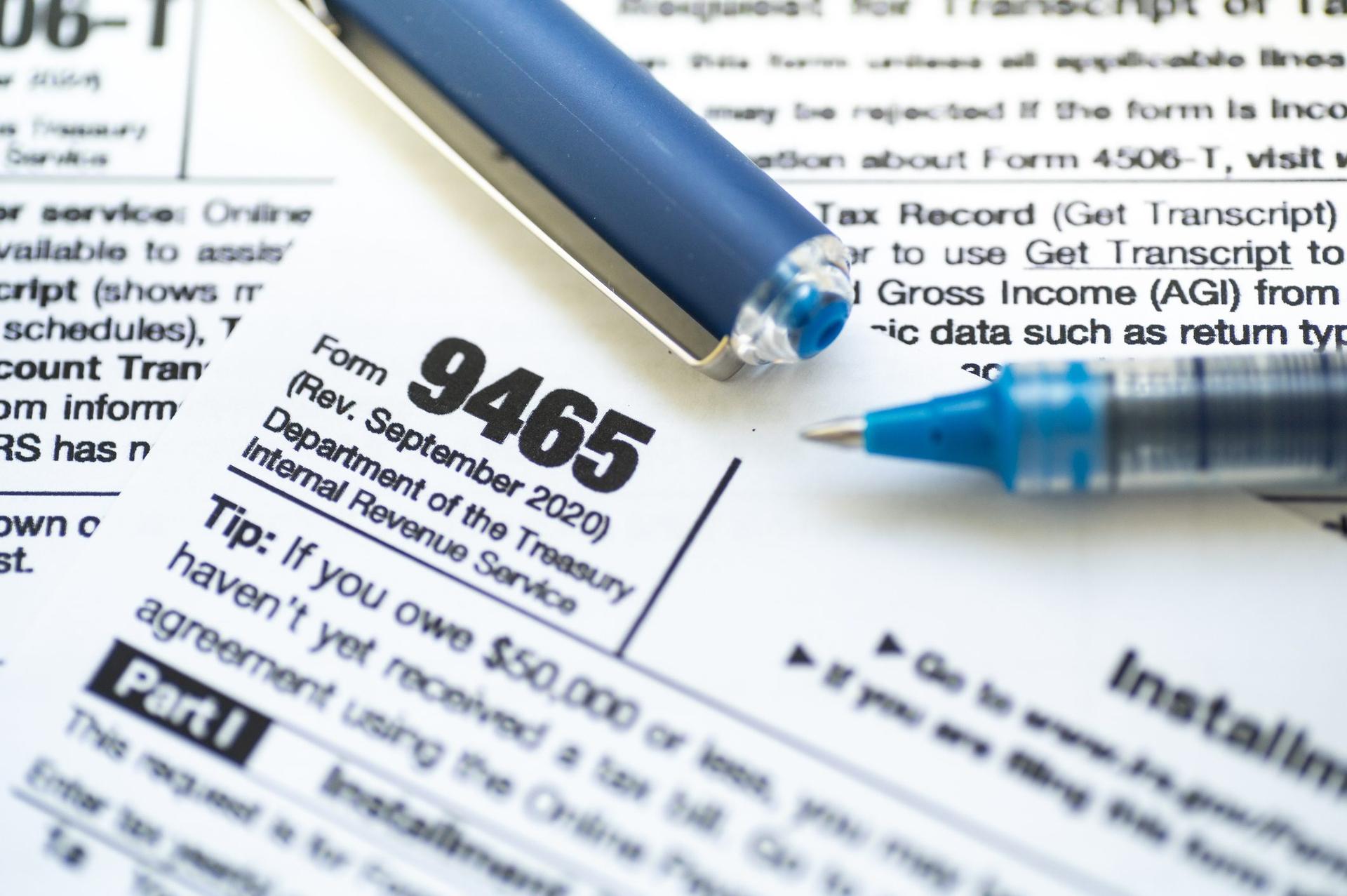


If you owe back taxes and can’t pay the full amount right now, you’re not alone—and you’re not out of options. IRS payment plans, also known as installment agreements, allow you to break down what you owe into manageable monthly payments. But before you enroll, it’s important to understand one key detail: the IRS payment plan interest rate.
Interest and penalties can add up quickly, and knowing how they work can save you real money (and a lot of stress). Let’s walk through how the IRS interest rates for payment plans are set, what the current interest rate on IRS payment plans is in 2025, and how you can minimize the total amount you’ll end up paying.
What Is the IRS Payment Plan Interest Rate?
The IRS doesn’t have a separate interest rate for payment plans. Instead, the same rule that applies to all unpaid taxes applies here too: interest accrues daily on the remaining balance until it’s fully paid. The interest rate on IRS payment plans currently stands at 7% per year, compounded daily.
That interest rate is based on a simple formula—the federal short-term rate plus 3 percentage points, as outlined in Section 6621 of the Internal Revenue Code. For most individual taxpayers, this means that if the federal short-term rate rises, your IRS interest rate will rise with it.
The IRS compounds interest daily. That means every day’s interest gets added to your balance, and the next day’s interest is calculated on the new total. The IRS also updates these rates every quarter to keep up with changes in national economic conditions.
In other words, when you set up a payment plan, your unpaid balance continues to grow based on the prevailing IRS underpayment interest rate, which is updated quarterly. This is why understanding the rate—and paying down your balance as efficiently as possible—is so important.
Ready to set up your payment plan? Follow our step-by-step instructions: How to Set Up an IRS Payment Plan: Installment Agreement Form 9465 Instructions.
Because these interest rates are updated quarterly, let’s look at where they stand right now—and what that means for taxpayers in 2025.
What Is the Interest Rate for IRS Payment Plans in 2025?
The current IRS interest rate for payment plans in 2025 follows the same pattern as general underpayment rates used for all IRS interest rates for individuals. For most individuals, the IRS payment plan interest rate in 2025 is 7% per year, compounded daily. This rate has remained steady through the first three quarters of 2025 and is confirmed for the fourth quarter under Revenue Ruling 2025-18.
For corporations, the situation is slightly different. While small and mid-sized businesses often face the same 7% rate, large corporate underpayments—those exceeding $100,000—can be charged up to 9% in some quarters.
Because these rates are recalculated every three months, the current interest rate on IRS payment plans can change over time. But for now, 7% remains the standard rate for individuals throughout most of 2025. Looking ahead, IRS payment plan interest rates in 2026 will continue to follow the same formula: the federal short-term rate plus 3%. You can always find the latest rates on the IRS website under “Quarterly Interest Rates.”
It can feel overwhelming, but understanding how interest adds up is the first step toward stopping it.
Mitigate High IRS Interest Rates With Expert Tax Strategy
The best way to mitigate high IRS interest rates is to reduce your principal balance before setting up your payment plan. Consulting a tax professional like TaxRise can help. Our experts analyze your full financial picture to determine which plan offers the lowest possible monthly payment, the least long-term cost, and the strongest protection from IRS collections. Take our quick survey and talk to a TaxRise professional today.
How the IRS Calculates Interest on Payment Plans (Daily Compounding Explained)
While the IRS doesn’t have a built-in IRS payment plan interest rate calculator, you can easily estimate how much interest the IRS charges for payment plans using the current IRS tax interest rate. Start with the annual interest rate (currently 7%), divide by 365 to find the daily rate, and apply it to your balance each day. Then, include the reduced 0.25% monthly penalty if you’re on a payment plan.
Some tax-relief professionals and financial tools can calculate this automatically. These calculators can help you see how much total interest might accrue on different term lengths—say, 36 months versus 72 months—and show how paying extra each month can dramatically lower your total interest cost.
Example: How Interest Adds Up Over Time
Imagine you owe $50,000 in back taxes and set up a 60-month (five-year) installment agreement at the current 7% interest rate with a 0.25% monthly penalty. Over five years, you could end up paying $12,000–$18,000 in interest and penalties, depending on your exact payment schedule.
If you shorten your repayment period—say, to 36 months—you could save thousands in total interest. The faster you pay, the more you keep in your pocket.
Numbers like that can feel intimidating, but they don’t have to define your future. The sooner you take action, the faster those totals shrink.
The IRS 180-Day Payment Plan Interest Rate
If you can pay your balance in six months or less, the IRS 180-day payment plan might be the perfect fit. This short-term plan carries no setup fee, and it still uses the same IRS interest rate for payment plans—currently 7%.
Even though interest and penalties will continue to build during those six months, the shorter repayment window means you’ll pay far less overall than you would under a multi-year agreement. If you can swing it, a 180-day plan is the fastest, simplest way to clear your tax debt without long-term interest costs.
The IRS Doesn’t Just Charge Interest—They Also Charge Tax Penalties
When you owe the IRS, interest is only part of the equation. The IRS also charges tax penalties on unpaid balances—even if you’re on a payment plan. Understanding these charges can help you make informed choices and avoid unnecessary costs.
The most common penalty is the failure-to-pay penalty, which starts at 0.5% of your unpaid taxes per month or part of a month. Once your installment agreement is approved and you start making payments, that penalty drops to 0.25% per month—a 50% reduction simply for staying compliant.
Meanwhile, interest keeps running in the background. The IRS payment plan interest rate is set quarterly and equals the federal short-term rate plus 3%, compounded daily. This interest applies not only to your unpaid tax, but also to any penalties or fees added to your balance.
That means your total debt grows until it’s paid in full—but how quickly it grows depends on how proactive you are. The longer your repayment plan lasts, the more you’ll owe in the end. That’s why paying as much as you can, as early as you can, makes such a difference.
Options for Reducing or Removing Penalties
The IRS offers a few ways to reduce or eliminate penalties if you qualify:
- First-Time Penalty Abatement (FTA):
If you’ve been compliant for the past three years, you may be eligible for Penalty Abatement which can wipe out certain tax penalties. To qualify, you must have filed all required returns and paid—or arranged to pay—any tax due. - Reasonable Cause Relief:
If you couldn’t pay due to serious circumstances like illness, natural disaster, or loss of records, you can request penalty relief. The IRS looks for proof that you acted in good faith and couldn’t pay on time despite your best efforts.
At TaxRise, we help our clients explore every avenue for penalty relief—including these programs—so they can keep more of their hard-earned money and focus on moving forward.
How to Reduce IRS Payment Plan Interest and Penalties
You have more control than you might think. Here are practical ways to reduce how much interest and penalties you pay:
- Pay more than the minimum whenever you can. Each extra dollar cuts your balance and future interest.
- Consider refinancing if you can qualify for a personal loan or credit line with a lower rate than the combined IRS interest and penalties.
- Request penalty or interest abatement using IRS Form 843 if you qualify—especially if your balance grew because of an IRS error or reasonable cause.
- Explore an Offer in Compromise (OIC) to potentially settle your debt for less than you owe.
- Stay current on all future tax filings and payments to keep your agreement in good standing.
- Monitor quarterly rate updates to stay aware of any changes to the IRS interest rates for individuals or the IRS tax interest rate in general.
- Check if you qualify for a Partial Payment Installment Agreement (PPIA), which allows you to make smaller monthly payments based on what you can reasonably afford, and in some cases, it can reduce the total amount you end up paying before the IRS stops collection efforts.
To reduce the overall burden of your payment plan, look beyond the interest rate. If your current payment plan no longer fits your financial life, you are allowed to change it. Switching to a different type of payment plan can help reduce your monthly payment by restructuring the payments. While this may create a longer repayment period, leading to more interest in the long-term, it can create a more comfortable budget month-to-month.
If you're ready to explore other types of payment plan options, read our guide: How to Choose the Best Type of IRS Installment Agreement for You
Rise Above Your Tax Debt
Tax debt doesn’t just weigh on your wallet—it weighs on your peace of mind. But understanding how IRS payment plan interest rates work is the first step toward financial freedom. Every payment you make moves you closer to stability, and every smart decision saves you money.
At TaxRise, our team of enrolled agents, case managers, and tax professionals helps Americans just like you resolve IRS debt through programs like the Fresh Start Initiative, IRS Installment Agreements, and customized payment plans. We’ll handle the hard parts, explain every step clearly, and fight for the best outcome possible.
Your story isn’t over—it’s just beginning a stronger chapter. Let’s rise above your tax debt together.